birth: the visited planet, part 4

Continuing from Philip Yancey’s The Jesus I Never Knew.

The facts of Christmas, rhymed in carols, recited by children in church plays, illustrated on cards, have become so familiar that it is easy to miss the message behind the facts. After reading the birth stories once more, I ask myself, If Jesus came to reveal God to us, then what do I learn about God from that first Christmas?

The word associations that come to mind as I ponder that question take me by surprise. Humble, approachable, underdog, courageous — these hardly seem appropriate words to apply to deity.

Humble. Before Jesus, almost no pagan author had used “humble” as a compliment. Yet the events of Christmas point inescapably to what seems like an oxymoron: a humble God. The God who came to earth came not in a raging whirlwind nor in a devouring fire. Unimaginably, the Maker of all things shrank down, down, down, so small as to become an ovum, a single fertilized egg barely visible to the naked eye, an egg that would divide and redivide until a fetus took shape, enlarging cell by cell inside a nervous teenager. “Immensity clothed in thy dear womb,” marveled the poet John Donne. He “made himself nothing … he humbled himself,” said the apostle Paul more prosaically.

I remember sitting one Christmas season in a beautiful auditorium in London listening to Handel’s Messiah, with a full chorus singing about the day when “the glory of the Lord shall be revealed.” I had spent the morning in museums viewing remnants of England’s glory — the crown jewels, a solid gold ruler’s mace, the Lord Mayor’s gilded carriage — and it occurred to me that just such images of wealth and power must have filled the minds of Isaiah’s contemporaries who first heard that promise. When the Jews read Isaiah’s words, no doubt they thought back with sharp nostalgia to the glory days of Solomon, when “the king made silver as common in Jerusalem as stones.”

The Messiah who showed up, however, wore a different kind of glory, the glory of humility. “‘God is great,’ the cry of the Muslims, is a truth which needed no supernatural being to teach men,” writes Father Neville Figgis. “That God is little, that is the truth which Jesus taught man.” The God who roared, who could order armies and empires about like pawns on a chessboard, this God emerged in Palestine as a baby who could not speak or eat solid food or control his bladder, who depended on a teenager for shelter, food, and love.

In London, looking toward the auditorium’s royal box where the queen and her family sat, I caught glimpses of the more typical way rulers stride through the world: with bodyguards, and a trumpet fanfare, and a flourish of bright clothes and flashing jewelry. Queen Elizabeth II had recently visited the United States, and reporters delighted in spelling out the logistics involved: Her four thousand pounds of luggage included two outfits for every occasion, a mourning outfit in case someone died, forty pints of plasma, and white kid leather toilet seat covers. She brought along her own hairdresser, two valets, and a host of other attendants. A brief visit of royalty to a foreign country can easily cost twenty million dollars.

In meek contrast, God’s visit to earth took place in an animal shelter with no attendants present and nowhere to lay the newborn king but a feed trough. Indeed, the event that divided history, and even our calendars, into two parts may have had more animal than human witnesses. A mule could have stepped on him. “How silently, how silently the wondrous gift is given.”

For just an instant the sky grew luminous with angels, yet who saw that spectacle? Illiterate hirelings who watched the flocks of others, “nobodies” who failed to leave their names. Shepherds had such a randy reputation that proper Jews lumped them together with the “godless,” restricting them to the outer courtyards of the temple. Fittingly, it was they whom God selected to help celebrate the birth of one who would be known as the friend of sinners.

In Auden’s poem the wise men proclaim, “O here and now our endless journey stops.” The shepherds say, “O here and now our endless journey starts.” The search for worldly wisdom has ended; true life has just begun.

more to come …

christmas memory lane

(Remember this, peeps? From Christmas 2004 ….. uhm, how do I get myself into these situations?)

So, I’m going to hell. Yesterday, I had a phone conversation with my 4-year-old niece where I pretended to be Santa Claus.

Yup. And this blog is now my cyber confessional.

Here’s the scene: My sister and I were on the phone. In the background, I heard Piper saying she wanted to "talk on da phone." Now, she didn’t know who my sister was talking to, and once she said hello, something …. happened to me. I spontaneously, inexplicably found myself saying, in the single WORST man-voice imitation of all time, "Ho Ho Ho! Pii-perrr …. this is Saaanntaa!"

(When I re-enacted it later for My Beloved, he couldn’t look directly at me. He simply cringed and declared, "Uhh, you sound more like a ghost. Or the Movie Phone guy.")

But it’s TRUE. I DID.

So I truly thought there was no chance — NO CHANCE — that she’d fall for it. Of course, the jig would be up instantly. I mean, I’d never been able to fool her with a "voice" before. But then there was an audible gasp on the other end of the phone. I waited for her to say, chidingly, "Tee Tee, I know it’s you." But she didn’t. Her little, speech-classed voice excitedly said:

"Santa?! Hi, Santa!"

(Ohhhhhh, nooo. Flames of hell tickling my toes.)

I had a split second to decide. I was so sure she’d already be laughing at me and saying, "You so funny, Tee Tee." But once I realized she was actually believing me, I had to keep going. I mean, what was I going to DO? Stop in the face of such excitement and lamely say, "Ha ha ha. Just kidding, Piper"?

So girding my dubious wits for this festive fraud, I bellowed:

"Have you been a good girl, Pii-perrr?"

"Oh, yes, Santa. I be good," she breathed.

"Well, why don’t you tell Sanntaa what you want for Christmas?"

Holy MOLY, I sounded stupid. The hellfires were spreading. So was the sweat. At that point, I just prayed that she’d keep believing.

She said something I couldn’t quite make out, so I just replied:

"Welll, o-kaaay. Sanntaa is writing that down. What else do you want for Christmas, Pii-perrr?"

I almost cried when she said, simply, "Dust a toy."

I had to pause to take a breath.

"What kind of toy, Pii-perrr?"

"Dust a toy," she repeated.

I told her I was writing that down, too. I was about to lose it. I wasn’t sure if I’d melt into tears or laughter, but one of them was imminent.

"So, Pii-perrr, are you going to leave Sanntaa some cookies to eat?"

"Oh, yes, Santa. I wiw!"

"Ho Ho OHH, that’s good. Sanntaa likes cookies!"

(Seriously, Movie Phone guy, watch out.)

"Okay," she said softly.

Finally, I said, "O-kaay, Pii-perrr. I’m coming to your house on Christmas Eve. But you need to be asleep. Okaaay, Pii-perrr?"

"Oh, yes, Santa. I be sweeping for shore."

"That’s good. You make Sanntaa verry haappy. HO HO HO! Bye Bye, Pii-perrr!"

Oh …. Sweet …. Lord …. forgive …. me. Fraud over, I collapsed back on the sofa to catch my breath. My sister was back on the line.

"Oh, thank you for calling, Santa." I could tell she was stifling laughter. She was gently coaxing Piper to leave the room so we could talk, but apparently, my niece was frozen in place, a wide-eyed, open-mouthed statue.

I told my sister, "Tell her Santa needs to talk to mommy about some Christmas surprises." (Refer to forgiveness plea above.)

She did, and Piper bolted from the room. My sister was in hysterics.

"How did you do that without laughing?"

"I don’t know!" I wailed.

"I could hear you. That was the worst voice I’ve ever heard you do."

"I know!" I wailed.

"All those years of acting and THAT’S what you come up with?"

"I KNOW!" I wailed.

It’s true — it was simultaneously the best AND worst performance I’d ever done.

"Well, I don’t know how she bought it, but she did. Her eyes were bugging out of her head."

My sister called this morning with news of the aftermath of SantaScam 2004. Apparently, immediately after the phone call, my elated niece insisted on calling her Nana and Pop-Pop to tell them Santa had called. She’s also quite adamant about the cookies. My sister tried to fob off some fudge on Santa, but Piper would have none of it. "No, Mommy. Santa wants cookies. He tole me. He tole me!"

I know. I know. Santa’s going to hell.

And without any cookies, too.

fingers crossed

Okay. I don’t know if I’ll be able to swing it, but I’m hoping to put up some excerpts from The Christmas Show. THE Christmas Show I did a couple years ago when I was teaching performing arts at the la-di-da private Christian school. I talked about it here. (Actually, haven’t finished part 2 of that yet. Ah, well. It’s hard to write about. My heart was so broken.)

Anyway, MB is working on converting the DVD to the correct file types for uploading onto YouTube. If it all works out, I’ll start putting up some of my favorite video excerpts from the show for Christmas week — next week! I’m kind of excited about putting it all together for you. It’s a slightly different kind of little kid Christmas show.

So stay tuned …

Hope I’m not blowing it by speaking too soon! I couldn’t help myself.

But I’m still crossing my fingers.

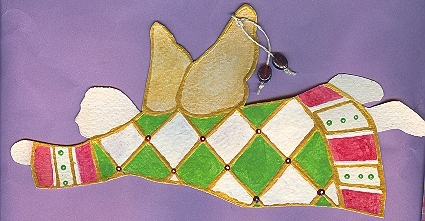
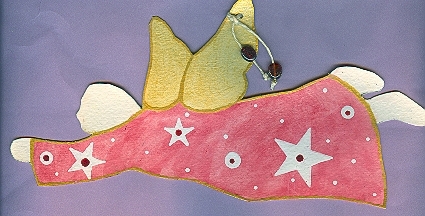
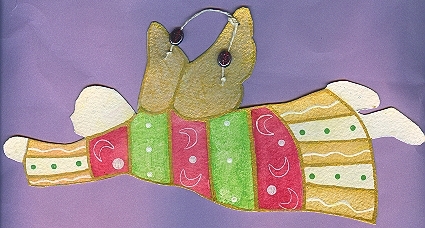
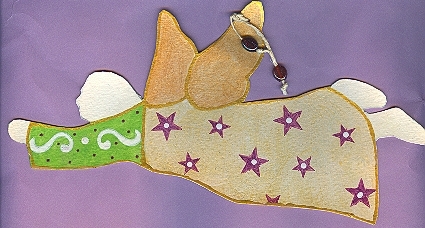
angels

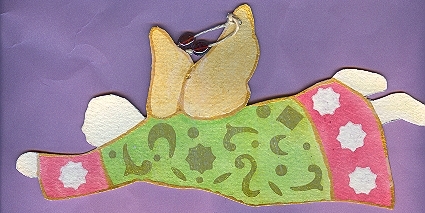
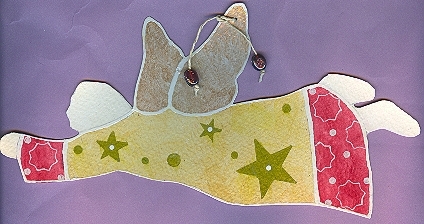
I started to decorate our tree tonight. I say “started” because I usually futz about with it for a few days. Ridiculous, I know, but I love it.

From the early days of our marriage — when we had nothing but love — to now — when we have nothing but love, I’ve made nearly all of the ornaments on our tree. They’re mostly made from — paper, what else??

As I unwrap my old paper friends, I spread them around me and sit among them. I sit and remember making them. I remember being happy making them. Or I remember being sad and still making them because I needed to climb into a different place in my head, a place walled off from sorrow where some kind of creative spark still flickered, however weakly.

So I remember these angels, from, oh, about 6 years ago. A terrible, sad year for us. Desperate, really.

But when Christmas rolled around I needed — felt compelled — to make something for the tree … end the year differently. Somehow. In whatever small and primal way. So I sat down one weekend with paper, paint, and scissors — like a kid — and crafted some rather naive folk-art style angels. I don’t think I moved from that spot the entire weekend. I was suspended in some sheltered place in my head where there was only snipping and brushing, snipping and brushing. Soothing, for that fleeting period of time, some remote, aching places in my heart.

Welcome to our tree, little angels. I remember you.

(just a few of them here…)
angel9.jpg

angel12.jpg

angel61.jpg

angel7.jpg

angel10.jpg

angel11.jpg

birth: the visited planet, part 3

Continuing my chapter excerpt from Philip Yancey’s The Jesus I Never Knew.

Part 1.

Part 2.

When the Jesuit missionary Matteo Ricci went to China in the 16th century, he brought along samples of religious art to illustrate the Christian story for people who had never heard it. The Chinese readily adopted portraits of the Virgin Mary holding her child, but when he produced paintings of the crucifixion and tried to explain that the God-child had grown up only to be executed, the audience reacted with revulsion and horror. They much preferred the Virgin and insisted on worshiping her rather than the crucified God.

As I thumb once more through my stack of Christmas cards, I realize that we in Christian countries do much the same thing. We observe a mellow, domesticated holiday purged of any hint of scandal. Above all, we purge from it any reminder of how the story that began at Bethlehem turned out at Calvary.

In the birth stories of Luke and Matthew, only one person seems to grasp the mysterious nature of what God has set in motion: the old man Simeon, who recognized the baby as the Messiah, instinctively understood that conflict would surely follow. “This child is destined to cause the falling and rising of many in Israel, and to be a sign that will be spoken against ….” he said, and then made the prediction that a sword would pierce Mary’s own soul. Somehow Simeon sensed that though on the surface little had changed — the autocrat Herod still ruled, Roman troops were still stringing up patriots, Jerusalem still overflowed with beggars — underneath, everything had changed. A new force had arrived to undermine the world’s powers.

At first, Jesus hardly seemed a threat to those powers. He was born under Caesar Augustus, at a time when hope wafted through the Roman Empire. More than any other ruler, Augustus raised the expectations of what a leader could accomplish and what a society could achieve. It was Augustus, in fact, who first borrowed the Greek word for “Gospel” or “Good News” and applied it as a label for the new world order represented by his reign. The empire declared him a god and established rites of worship. His enlightened and stable regime, many believed, would last forever, a final solution to the problem of government.

Meanwhile, in an obscure corner of Augustus’s empire the birth of a baby named Jesus was overlooked by the chroniclers of the day. We know about him mainly through four books written years after his death, at a time when less than one-half of one percent of the Roman world had ever heard of him. Jesus’ biographers would also borrow the word gospel, proclaiming a different kind of new world order altogether. They would mention Augustus only once, a passing reference to set the date of a census that ensured Jesus would be born in Bethlehem.

The earliest events in Jesus’ life, though, give a menacing preview of the unlikely struggle now under way. Herod the Great, King of the Jews, enforced Roman rule at the local level, and in an irony of history we know Herod’s name mainly because of the massacre of the innocents. I have never seen a Christmas card depicting that state-sponsored act of terror, but it too was a part of Christ’s coming. Although secular history does not refer to the atrocity, no one acquainted with the life of Herod doubts him capable. He killed two brothers-in-law, his own wife Mariamne, and two of his own sons. Five days before his death he ordered the arrest of many citizens and decreed that they be executed on the day of his death, in order to guarantee a proper atmosphere of mourning in the country. For such a despot, a minor extermination procedure in Bethlehem posed no problem.

Scarcely a day passed, in fact, without an execution under Herod’s regime. The political climate at the time of Jesus’ birth resembled that of Russia in the 1930s under Stalin. Citizens could not gather in public meetings. Spies were everywhere. In Herod’s mind, the command to slaughter Bethlehem’s infants was probably an act of utmost rationality, a rearguard action to preserve the stability of his kingdom against a rumored invasion from another.

In For the Time Being, W. H. Auden projects what might have been going on inside Herod’s mind as he mused about ordering the massacre:

Today has been one of those perfect winter days, cold, brilliant, and utterly still, when the bark of a shepherd’s dog carries for miles, and the great wild mountains come up quite close to the city walls, and the mind feels intensely awake, and this evening as I stand at this window high up in the citadel, there is nothing in the whole magnificent panorama of plain and mountains to indicate that the Empire is threatened by a danger more dreadful than any invasion of Tartar on racing camels or conspiracy of the Praetorian Guard …..

O dear. Why couldn’t this wretched infant be born somewhere else?

And so Jesus the Christ entered the world amid strife and terror, and spent his infancy hidden in Egypt as a refugee. Matthew notes that local politics even determined where Jesus would grow up. When Herod the Great died, an angel reported to Joseph it was safe for him to return to Israel, but not to the region where Herod’s son Archelaus had taken command. Joseph moved his family instead to Nazareth in the north, where they lived under the domain of another of Herod’s sons, Antipas, the one Jesus would call “that fox,” and also the one who would have John the Baptist beheaded.

A few years later the Romans took over direct command of the southern province the encompassed Jerusalem, and the cruelest and most notorious of these governors was a man named Pontius Pilate. Well-connected, Pilate had married the granddaughter of Augustus Caesar. According to Luke, Herod Antipas and the Roman governor Pilate regarded each other as enemies until the day fate brought them together to determine the destiny of Jesus. On that day they collaborated, hoping to succeed where Herod the Great had failed: by disposing of the strange pretender and thus preserving the kingdom.

From beginning to end, the conflict between Rome and Jesus appeared to be entirely one-sided. The execution of Jesus would put an apparent end to any threat, or so it was assumed at the time. Tyranny would win again. It occurred to no one that his stubborn followers just might outlast the Roman empire.


more to come …..

christmas tree night

Sunday night, MB and I purchased our — real! — Christmas tree and headed over to Target to get a tree stand. Mainly because we started having a debate about whether we actually still had our other tree stand. I thought we did. He thought not. So, fine. Off to Target we went.

Upstairs in the Christmas section, a very small dark-haired boy came wheeling a shopping cart around the corner towards us. His arms were stretched above his head in order to push the cart forward; that’s how little he was, but he seemed to be having no problem navigating the thing. The aisle was crammed with people choosing lights and paper and ornaments and all the other Christmas gew-gaws. As this little little boy rolled towards us, he started singing loudly, a warbly wanna-be opera singer:

O holy ni-i-i-i-i-i-i-i-ght!

The stars are brightly shi-i-i-i-i-i-i-i-ning!

It is the night of our dear Savior’s b-i-i-i-i-i-rth!

He just tilted his little head back and sang with total abandon, shaking those vowels out, as if no one was looking at him. But, of course, everyone was. Shoppers stole peeks at our pint-sized caroler, smiling, chuckling, poking their companions. But the boy just kept on singing. And, suddenly — I swear — the air itself was different. Right there, in that crowded, grouchy aisle. Some kind of calm washed over all of us. Some kind of pause. Some kind of lifting. A lady who may have been Gramma was with him but she didn’t shush him or discourage him. She just let him do what he wanted to do: push that cart and sing and sing about that holy night.

In the car on the way home, we grinned like goons and just generally felt like we were now better people somehow.

Then … back home, as MB worked and wiggled our tree into the shiny new tree stand, grunting all the while, he paused and announced grimly, “Well … here comes the swearing part of Christmas.”

googling “it’s a wonderful life”

Okay. I’ve officially lost track of what Day # this is because I’ve skipped a few. Thank you for kindly not calling this to my attention. It’s the holidays; my head’s a little twisty.

This photo is killing me, though.

Yep. It’s a wonderful life sittin’ in a squash-colored tub, drinkin’ dirty bathwater, while Ma snaps a photo.

googlewonderf25.jpg

sheer loveliness …

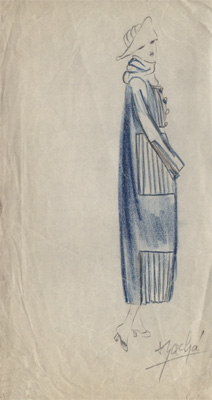
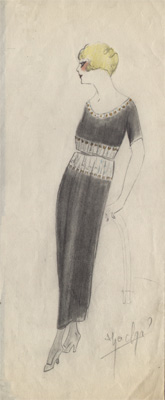
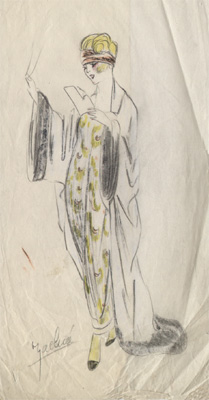
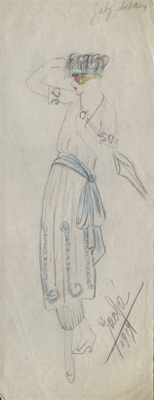
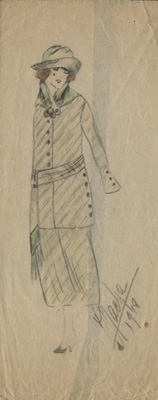
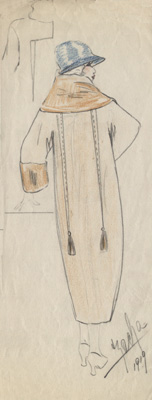
Ohhhh! Look what I stumbled across! Some rare watercolors and pencil and ink sketches from Parisian fashion house Marthe Ida. They are signed by Zacha, one of the star designers for Marthe Ida and date from 1920 – 1930. I confess I know nothing whatsoever about this fashion house or Zacha, but I do know that these drawings are gorrrrgeous. You can order one here. Click around while you’re over there. Some truly beautiful things. (Sheila, you MUST check it out.)

martheida3.jpg

martheida5.jpg

martheida14.jpg

martheida16.jpg

martheida2.jpg

martheida15.jpg